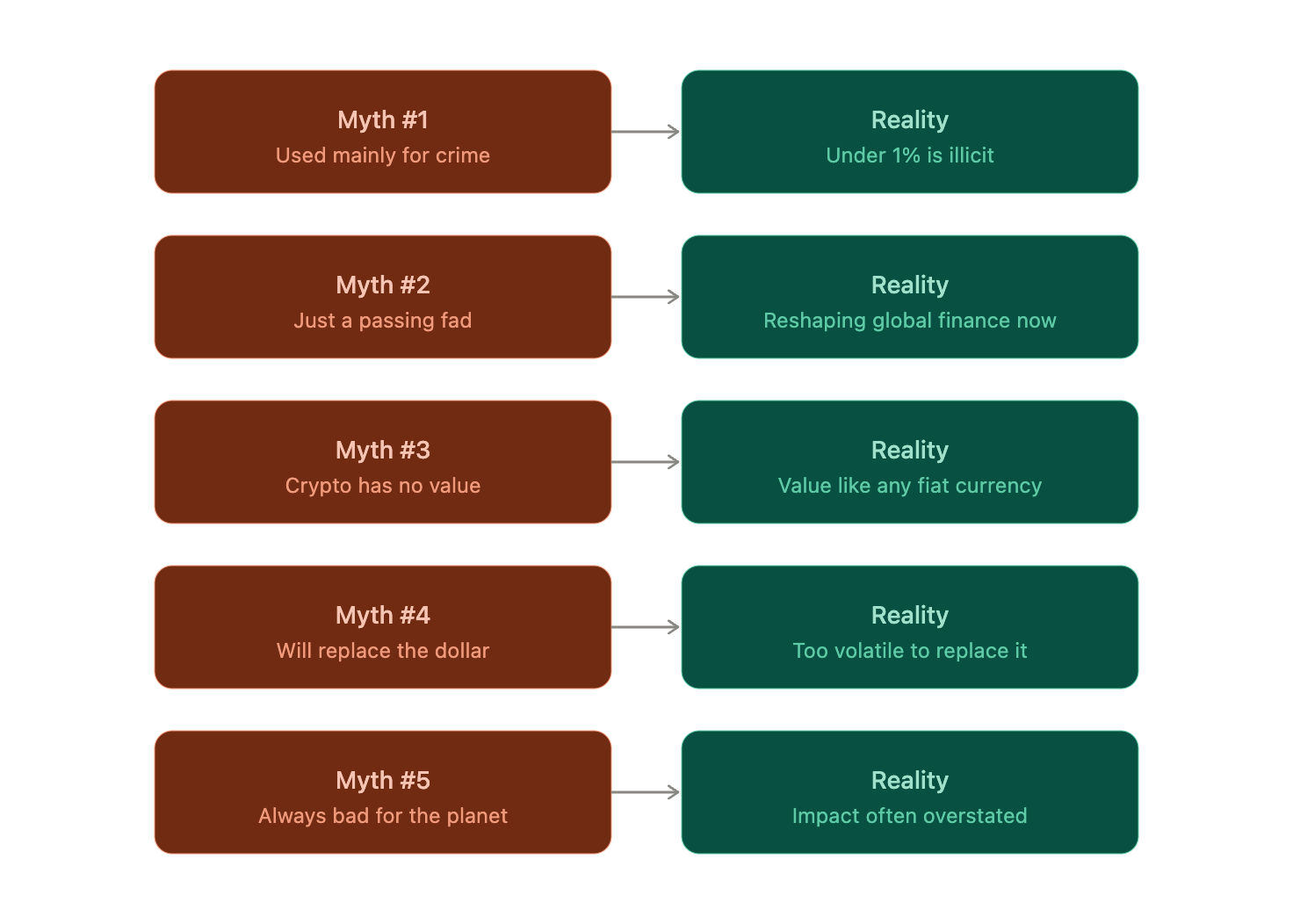
The world of digital currencies is filled with myths, half-truths, exaggerations, and downright misinformation. Here are five of the most common cryptocurrency myths and the reasons why they don’t stand up to scrutiny.
The world of digital currencies is filled with myths, half-truths, exaggerations, and downright misinformation. This is why it’s important to look below the surface to see what’s true and what isn’t. Here are five of the most common cryptocurrency myths and the reasons why they don’t stand up to scrutiny.
Myth #1: Cryptocurrencies are mostly used for illegal transactions
Cryptocurrencies picked up this reputation for a reason. High-profile ransomware attacks and the Silk Road marketplace put crypto and crime in the same headlines for years.
But the numbers tell a different story:
MIT Sloan estimates that around 3% of Bitcoin transactions are illegal, with the other 97% legitimate buying or trading.
Chainalysis's 2026 Crypto Crime Report puts illicit activity at under 1% of all attributed crypto transaction volume in 2025, even as its dollar value hit a record.
There's no evidence that criminal activity drives blockchain networks.
Stricter regulation is shrinking crime's share of the pie over time, even as total crypto activity grows.
The reality: illegal activity is a shrinking slice of a fast-growing market, not its foundation.
Myth #2: Digital currencies are just a fad
Skeptics point to high prices, thin oversight, and trader hype as proof crypto won't last. There's some truth in each of those criticisms, but none of them predicts the end of the ecosystem.
DeFi (decentralized finance) may soon make some financial services possible without banks at all.
The reality: digital currencies are becoming a bigger part of the global financial system, not a passing trend.
Myth #3: Cryptocurrencies aren’t valuable
Bitcoin and other digital currencies don't have intrinsic value in the way gold does. That's true. But it's also true of the dollar and every other fiat currency in circulation today.
Fiat currency is only worth what people collectively believe it's worth.
Bitcoin has built-in scarcity, giving it a form of value gold doesn't share.
The Bitcoin blockchain itself gives the asset functional value beyond speculation.
The reality: crypto isn't obviously less valuable than the money people already use every day.
Myth #4: Bitcoin will eventually replace the dollar
Not every cryptocurrency myth comes from skeptics. Some crypto bulls overstate the case too, and this is the big one.
Bitcoin's volatility makes it a poor stand-in for a historically stable currency like the dollar.
Bulls arguing for replacement rarely explain what's actually broken about the dollar.
Digital currencies are still too new to have a proven track record as a long-term store of value.
The reality: replacement isn't impossible, but nothing today supports it happening soon.
Myth #5: Cryptocurrencies are bad for the environment
This is the one myth with real substance behind it. Blockchain networks do use significant electricity.
Traditional banking and gold mining also carry large environmental footprints.
Mining profits have funded new green energy infrastructure in some regions.
The reality: the environmental impact is real but often overstated relative to the alternatives.
Frequently Asked Questions
Is crypto really anonymous?
No. Most blockchains, including Bitcoin's, are pseudonymous rather than anonymous. Every transaction is recorded on a public ledger, and analytics firms can often trace activity back to real identities.
Is Bitcoin actually used for crime?
A small amount, yes, but it's a shrinking share of overall activity. Chainalysis estimates illicit transactions made up under 1% of total crypto transaction volume in 2025.
Is crypto bad for the environment?
Crypto mining does use significant electricity, but so do traditional banking and gold mining. A growing share of mining activity also relies on renewable energy.
Will Bitcoin replace the dollar?
It's unlikely any time soon. Bitcoin's price volatility and short track record make it a poor fit to replace a stable, established currency like the U.S. dollar.
We explain crypto in plain, simple language with no hardcore technical stuff, so getting started feels easy, not overwhelming. Educational content only, not financial advice.