

Crypto Taxes Explained: A Beginner's Guide for 2026
How are crypto taxes handled in the US? A beginner's guide to capital gains, crypto income, reporting, and simple ways to keep your tax bill lower.
How are crypto taxes handled in the US? A beginner's guide to capital gains, crypto income, reporting, and simple ways to keep your tax bill lower.
Crypto taxes trip up almost everyone the first time. You buy a little Bitcoin, swap some for another coin, maybe earn a few staking rewards, and suddenly tax season feels like a pop quiz you didn't study for.
Here is the good news: the rules are more manageable than they look. In the United States, the IRS treats cryptocurrency as property, so how crypto is taxed follows the same logic as stocks or a house.
You owe tax when you sell, swap, spend, or earn crypto, and you report the results on your tax return. This guide breaks down crypto taxes in plain English, with simple examples, so you know exactly what counts.
One quick note before we start. This is general education, not tax or investment advice. Rules change, and everyone's situation is different. For anything past the basics, talk to a qualified tax professional.
If you remember nothing else, remember this: the IRS does not treat your crypto like the cash in your pocket. It treats it like property.
Picture a collection of baseball cards. Buying a card doesn't affect to your taxes. The moment you sell a card for more than you paid, that profit is on the table.
Crypto works the same way. Buying and holding is a quiet, tax-free event. Selling, swapping, or spending is when the tax question shows up.
This comes straight from IRS Notice 2014-21, which states that virtual currency is treated as property and the normal property tax rules apply. Every other rule in this guide grows out of that single decision.
This is where beginners get surprised. You can owe tax even if you never move a single dollar back to your bank.
A simple way to picture it: imagine a tiny garage sale that runs every time you use your crypto. Each time you hand over something worth more than you paid, the gain counts.

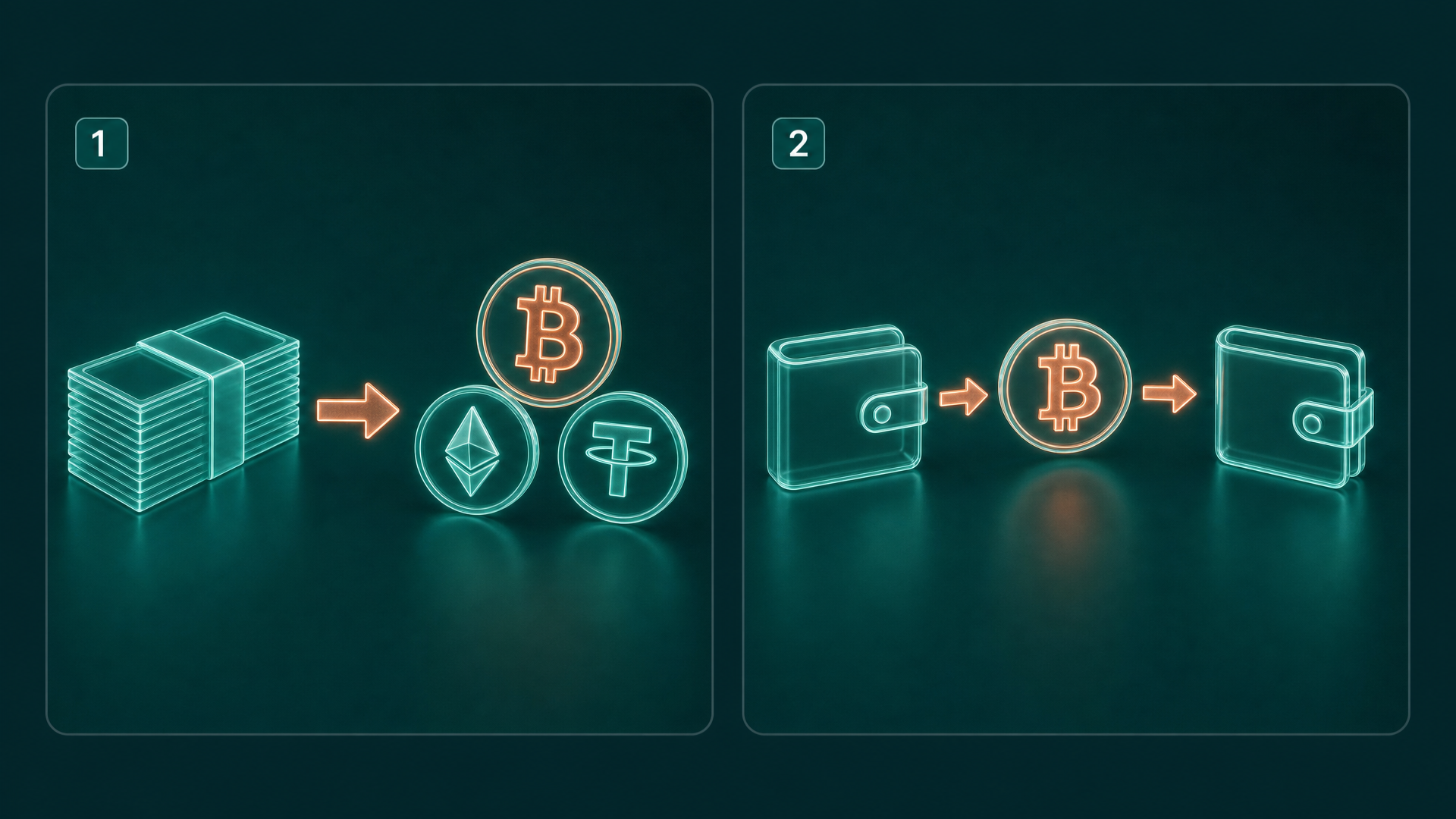
One thing worth knowing: there is no "too small to count" rule. Lawmakers floated an exemption for tiny crypto purchases in 2025, but it did not pass. So technically, even buying coffee with Bitcoin is a taxable sale. The gain in that case is usually pennies, but the rule stands.
When you sell crypto for a profit, that profit is a capital gain. How long you held the coin decides your rate, and the gap is wide enough to plan around.
Think of it like a loyalty discount for patience.
Hold your crypto for one year or less, and any gain is a short-term gain, taxed at your regular income rate. That can run from 10% up to 37%.
Hold it for more than one year, and it becomes a long-term gain, taxed at a friendlier 0%, 15%, or 20%, depending on your income.
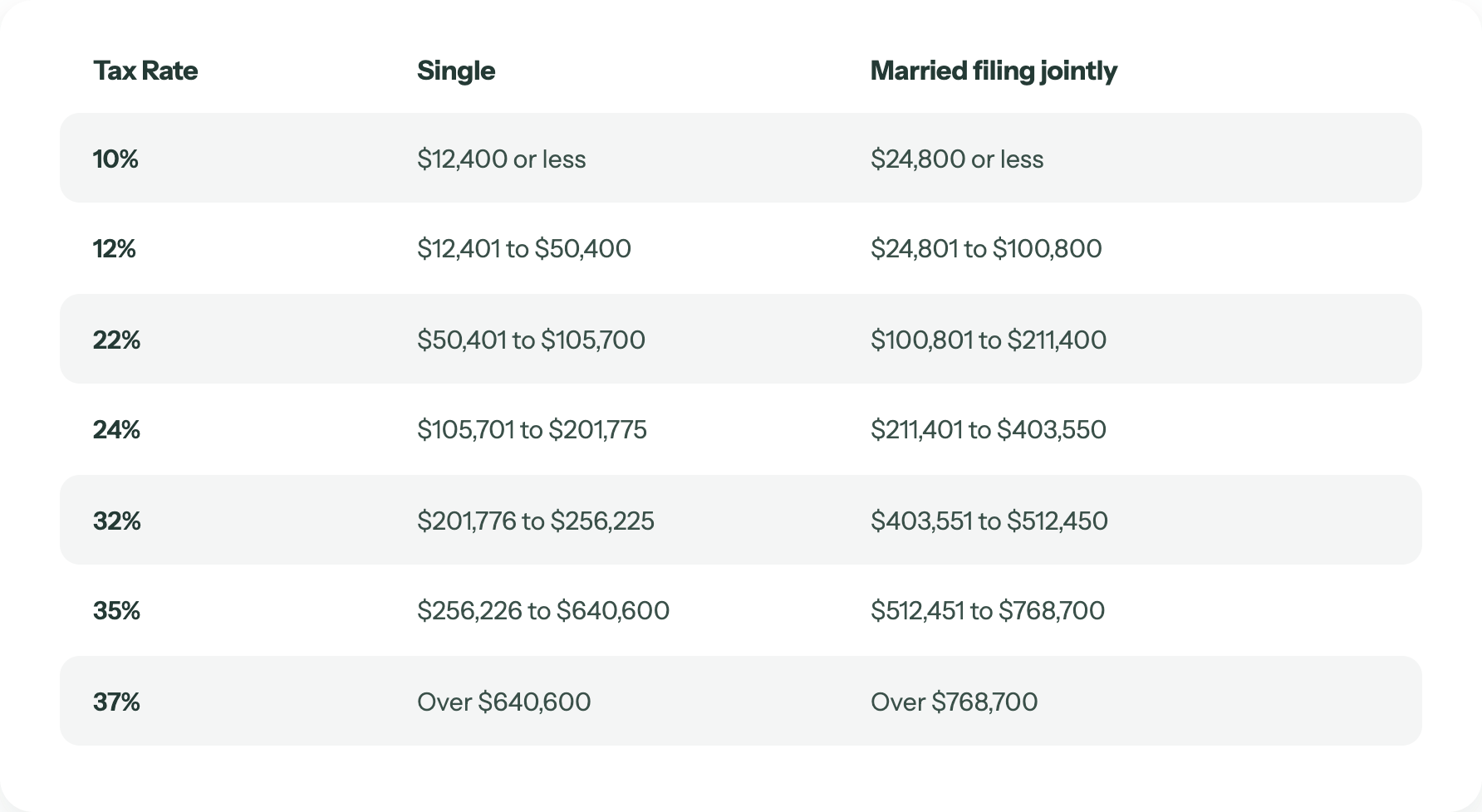
For the 2026 tax year (the return you file in early 2027, the long-term brackets look like this:
You pay 0% on long-term gains if your total taxable income sits under $49,450 for single filers or $98,900 for married couples filing jointly. That is not a typo. Zero.
The 15% rate covers most people above that, up to $545,500 (single) or $613,700 (married filing jointly).
The 20% rate applies above those levels. You can confirm the current figures on the IRS page for Topic No. 409, Capital Gains and Losses.
Here is the payoff in real numbers. Say you buy Bitcoin for $5,000 and it grows to $8,000. Sell at 11 months, and your $3,000 gain is taxed at your regular income rate. Wait until you pass the one-year mark, and that same gain drops into the long-term bucket, often saving you real money. Same profit, different tax, decided by the calendar.
So far we have covered profit from selling. But sometimes crypto lands in your account as a reward or a payment. That is income, and it plays by different rules.
Think of it as two separate paychecks. When you receive crypto, its dollar value that day counts as ordinary income, just like a paycheck. If you later sell it for more, that extra growth is a capital gain, like a bonus on top. Two events, two taxes, and you are not taxed twice on the same value.
Here is how that shows up in common situations:
Staking rewards are income the moment you can freely use them. The IRS made this official in Revenue Ruling 2023-14. Receive staking rewards worth $200 the day they become available to use, and that $200 is income now. Sell them later for $260, and the extra $60 is a capital gain.
Mining rewards are income at their dollar value on the day you receive them.
Airdrops and coins from a hard fork become income once they land in a wallet you control.
Getting paid in crypto for work is income at its value when you receive it, the same as wages.
The messy part is timing and edge cases. The exact moment staking becomes taxable has been argued in court, and DeFi rewards, liquidity pools, and node operation get complicated fast. If that is your world, a tax pro earns their fee.
Here is a rule that currently works in crypto's favor, and most beginners have never heard of it.
With stocks, there is a "no take-backs" rule. Sell a stock at a loss, rebuy it within 30 days, and the IRS blocks you from claiming that loss. It is called the wash sale rule, and it exists to stop people from booking fake losses just to cut their taxes.
That rule only applies to stocks and securities. Because crypto is classified as property, it does not apply to crypto right now. So you can sell Bitcoin at a loss, claim the loss on your taxes, and rebuy it the same day. As of mid-2026, no law has changed this.
Two cautions. Congress has tried to close this gap more than once, so treat it as a "for now" rule, not a permanent perk. And it does not work the same way for crypto ETFs, since those count as securities.
Nobody enjoys a loss, but the tax code gives you a way to make one useful. It is called tax-loss harvesting, and it is simpler than the name suggests.
Your losses first cancel out your gains. Make $9,000 on one coin and lose $4,000 on another, and you are only taxed on $5,000. If your losses are bigger than your gains, you can use up to $3,000 of the extra to lower your regular income for the year, then carry the rest forward to future years.
Because crypto skips the wash sale rule, you have more flexibility here than stock investors do. Some people sell a losing position to lock in the loss, then step right back in.
Donating crypto is another move worth knowing. Give appreciated crypto you have held over a year straight to a qualified charity, and you can generally deduct its full value while skipping the capital gains tax you would owe if you sold it first. You have to itemize to claim it, and large donations need a formal appraisal.
Reporting is getting more formal, so it helps to know what is coming.
You have always had to report crypto income and gains, whether or not you receive a form. Capital gains go on Form 8949 and Schedule D. Income goes on Schedule 1 or Schedule C. And every Form 1040 has a yes-or-no question about digital assets near the top that you must answer.
The new piece is Form 1099-DA. Starting with 2025, US crypto platforms began reporting your sale proceeds to you and to the IRS. Cost basis, meaning what you originally paid, gets added for certain assets bought in 2026 and later. You can read the specifics on the IRS page About Form 1099-DA.
The takeaway: keep your own records. For now, the form may only show what you sold something for, not what you paid, so you will often calculate the gain yourself. Either way, the responsibility to report correctly stays with you.
If you hold crypto across more than one wallet or platform, a 2025 rule change matters. Think of it like receipts. You used to be able to dump every receipt for the same coin into one shoebox and average it out. Now the IRS wants a separate shoebox for each wallet or account, and you track your cost per wallet instead of pooling everything. Good crypto tax software handles this automatically, and keeping your holdings organized in a secure crypto wallet makes the paperwork far less painful.
Usually yes, on top of federal tax. Most states fold crypto gains into your state income tax.
The size of the bite depends on where you live. States with no personal income tax, like Florida, Texas, and Wyoming, generally do not tax your crypto gains at all. States that do have income tax usually tax crypto gains at their normal rates. So two people with the same $50,000 gain can owe very different amounts based on their zip code. State rules also change often, so check your own state's guidance if you have a large gain or you moved during the year.
You do not need to memorize the tax code. A few habits cover most of it.
Keep a record of what you paid and when, for everything you buy. Note the dollar value of any crypto you earn on the day you receive it. Remember that swapping and spending count as sales, not just cashing out. Store your keys and holdings safely, since clean records start with a secure setup, which RockWallet covers in its beginner's guide to crypto security. And when your situation gets complex, with staking, DeFi, business mining, or big gains, bring in a professional before you file.
Crypto taxes feel intimidating at first, but the core idea is friendly enough. Buy and hold freely, and the tax question only shows up when you sell, swap, spend, or earn. Once that clicks, the rest is mostly good record-keeping.
Often, yes. Swapping one coin for another and spending crypto both count as taxable sales, even though no cash reaches your bank account. Only buying with cash and moving crypto between your own wallets are free of tax.
It depends on how long you held and how much you earn. Crypto held one year or less is taxed at your regular income rate, from 10% to 37%. Crypto held longer than a year is taxed at long-term rates of 0%, 15%, or 20%, based on your total taxable income for the year.
Yes. Staking and mining rewards are treated as ordinary income at their dollar value the day you receive them. If you later sell those coins for more, the extra growth is a separate capital gain. That is two taxable moments, not one.
Not right now. Because the IRS treats crypto as property rather than a security, you can sell at a loss and rebuy immediately while still claiming the loss. This could change if Congress passes new rules, so keep an eye on it.
Form 1099-DA is a new tax form US crypto platforms use to report your sale proceeds to you and the IRS, starting with 2025 activity. You may receive one, but you still must report all crypto income and gains yourself, even for activity that isn't on the form.
Yes. There is no minimum threshold that exempts small crypto sales or income. Every taxable event should be reported, though the tax owed on a tiny gain is usually very small.

Aalind makes crypto, Web3, & DeFi easy to understand for newcomers, skipping the jargon & explaining things clearly. He's grown 30k+ followers & 6M+ views, & studied 100+ crypto projects. His writing is for education only, not financial advice.
Buy, sell, and trade crypto on the go with RockWallet.