Top 5 crypto scams to watch for as a newcomer
Five things a crypto beginner learns the hard way, explained simply and honestly before you need them.
Five things a crypto beginner learns the hard way, explained simply and honestly before you need them.
Most scam warnings in crypto are written after something goes wrong.
A big exchange collapses. A phishing attack hits thousands of users. A celebrity-endorsed token turns out to be worthless. The headlines cover it, the forums discuss it, and everyone says: you should have known.
But nobody explained what to look for before it happened.
This post is that explanation. The five scenarios you'll encounter as a newcomer, written the way a friend would describe them, not the way a legal disclaimer would.
You're having a problem with a wallet or exchange. You search for help, find what looks like an official support account on X or Reddit, and send a message.
The account responds quickly, professionally, and asks for your seed phrase or asks for your recovery code to verify your account or fix the issue.
There is no real support agent here. No crypto company should ever ask for your seed phrase. Not in a DM. Not in a support ticket. Not ever. The seed phrase is the master key to your wallet. Sharing it with anyone gives them complete access to everything in it.
The rule is simple: if anyone asks for your seed phrase, it is a scam. It does not matter how official the account looks, how urgent the message feels, or which platform it came through.
You get a message, sometimes from a stranger, sometimes from someone who has been building a friendly relationship with you for weeks, about a crypto investment opportunity. The returns are exceptional. The window is closing. You need to act now.
The pressure is the signal.
Real investment opportunities don't evaporate in 24 hours. Real platforms don't require urgency. The moment someone is pushing you to move fast, the right move is to slow down completely.
This pattern shows up in many forms: the exclusive token, the guaranteed return account, the romantic connection that eventually asks for a crypto transfer. The emotional framing varies. The mechanic is always the same: create urgency, bypass careful thinking, and move money before the person has a chance to reconsider.
If someone is pressuring you, stop. Talk to someone you trust offline. Sleep on it. The actual opportunity will still be there tomorrow.
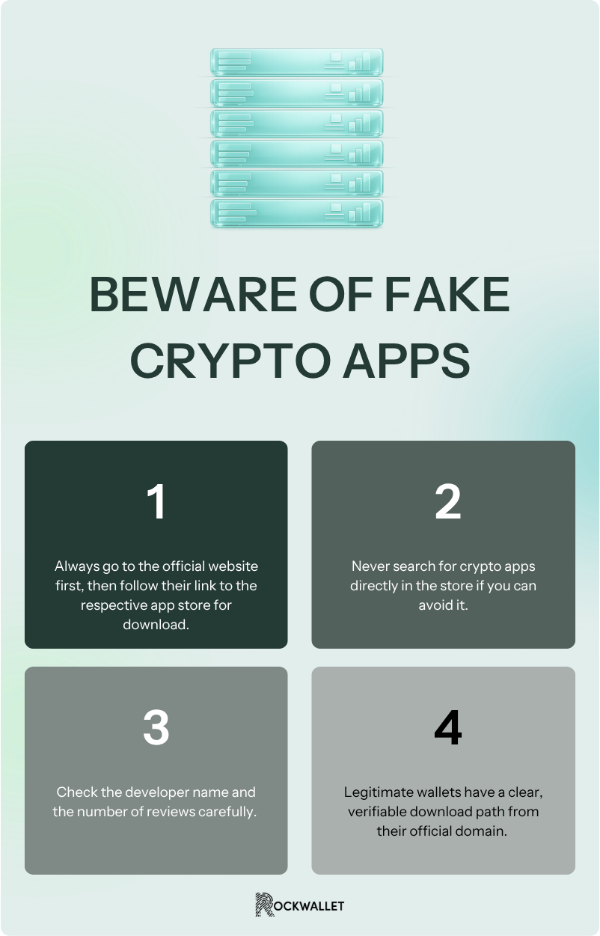
You search for a wallet or exchange in the App Store or Google Play. The first result looks right, same logo, similar name, decent reviews. You download it, enter your credentials, and give it wallet access.
The app is fake. It was built to capture exactly what you just gave it.
How to protect yourself: always navigate to the official website first, then follow their link to the app store download. Never search for crypto apps directly in the store if you can avoid it. Check the developer's name and the number of reviews carefully.
Respectable wallets will have a clear, verifiable download path from their official domain.
Someone contacts you by phone, text, or email, claiming to be from your bank, the government, or a crypto company. They tell you your account has been compromised, and you need to move your funds to a secure wallet or protection account they will provide.
This is one of the most effective scams operating right now, particularly targeting people who are new to crypto and already nervous about security.
The tell: no legitimate institution will ever call you unsolicited and ask you to move funds. If you receive a call like this, hang up. Go to the company's official website directly and contact them to verify.
If you're using RockWallet and receive a call claiming to be from us asking you to move funds: it isn't us. Hang up.
Send us one coin, get two back. Lock your crypto here for 40% weekly returns. Get early access to the token that's about to multiply your money tenfold.
These exist in every corner of crypto, from social media ads to Discord servers, YouTube comments, and celebrity-endorsed posts that turn out to be hacked accounts.
If the return sounds impossible in any other financial context, it's impossible here too. Crypto doesn't change the laws of economics. Nobody is giving away money. When someone promises extraordinary returns, they're either lying about the returns or lying about the risk, usually both.
The same judgment that protects you in every other financial decision protects you here too.
Every scam above relies on the same thing and that is getting you to act before you think.
The single most protective habit in crypto is simple, pause before you:
Crypto transactions can't be undone. That's what makes them powerful and what makes the stakes real. Taking ten minutes to verify something, checking the official website, calling someone you trust, searching for the name plus the word scam, costs you almost nothing and protects you from almost everything.
RockWallet runs active fraud screening on every transaction.
A layer of protection that works quietly in the background while you focus on everything else.
Final post: "The things I wish I'd known before I started buying crypto."
Disclaimer: The information in this article is for educational purposes only and should not be construed as financial advice. Cryptocurrency investments involve risk, including possible loss of principal. Past performance is not indicative of future results. RockWallet does not provide investment advice. Please consult a qualified financial professional before making investment decisions.
We explain crypto in plain, simple language with no hardcore technical stuff, so getting started feels easy, not overwhelming. Educational content only, not financial advice.
Buy, sell, and trade crypto on the go with RockWallet.